TPO vs. EPDM Roofing: Which Is Better for a Commercial Building?
September 14, 2026

Quick answer: Neither membrane is better across the board, and for a Connecticut building the deciding factors are usually not the ones you will read about elsewhere. TPO gives you heat-welded seams that can be tested, repaired, and welded again years later, plus a reflective surface. EPDM gives you a long track record, excellent low-temperature flexibility, and fewer seams on wide-open roofs. The practical tiebreaker in our climate is seam serviceability in cold weather: a TPO seam can be hot-air welded on a January repair call, while EPDM seam tape and adhesives have minimum application temperatures that a Connecticut winter regularly falls below.
International Roofing LLC is a commercial roofing contractor based in Berlin, Connecticut. Commercial roofing is all we do, and we install and service both systems across Hartford County and Central CT, along with PVC, modified bitumen, built-up roofing, and commercial metal. That means we have no reason to push you toward one membrane, and we have been on enough 15-year-old roofs of both types to know how each one ages here.
In This Guide
What each membrane actually is
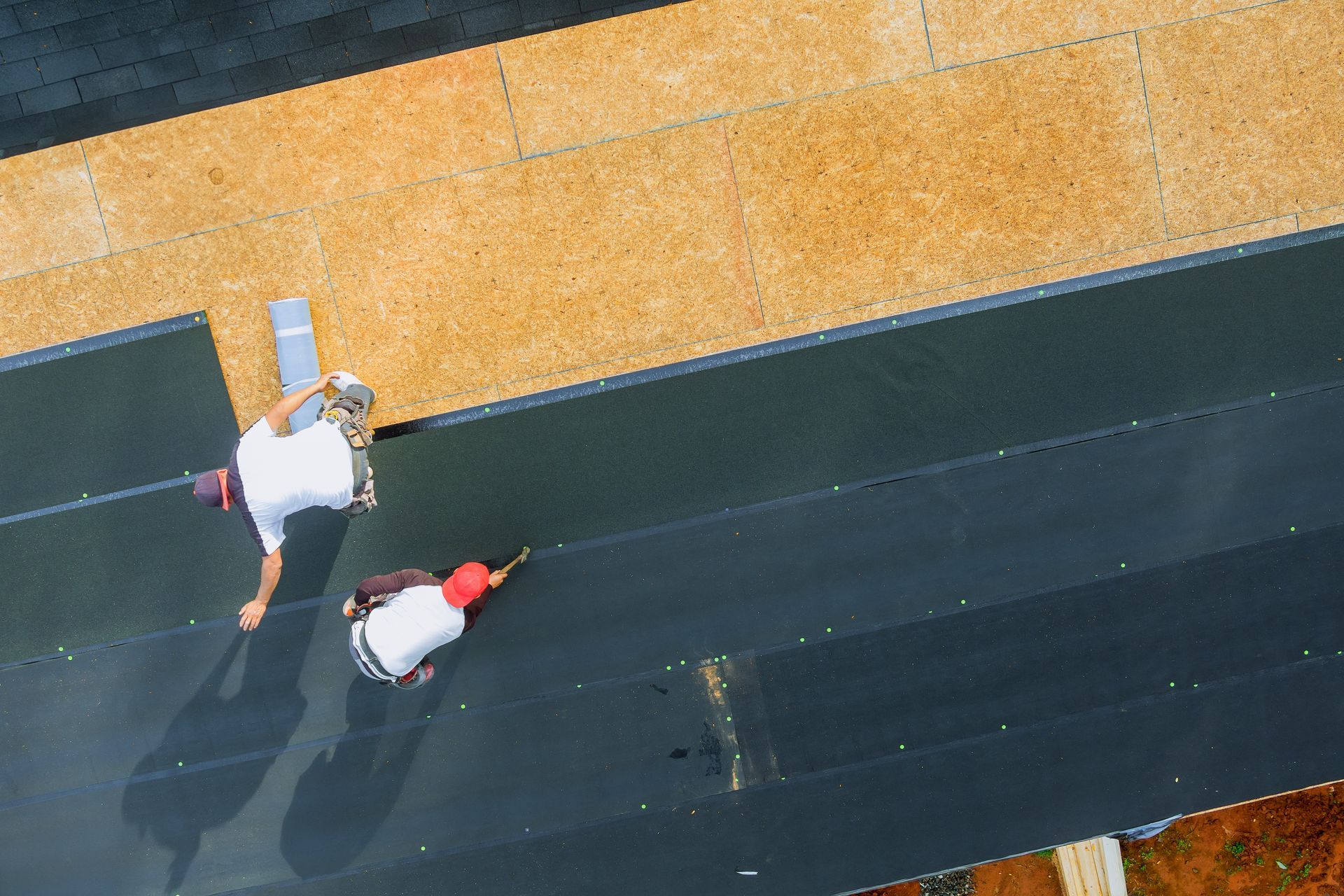
Both are single-ply membranes for low-slope commercial roofs, and both come in mechanically attached, fully adhered, and in EPDM's case ballasted configurations. That is where the similarity ends.
TPO
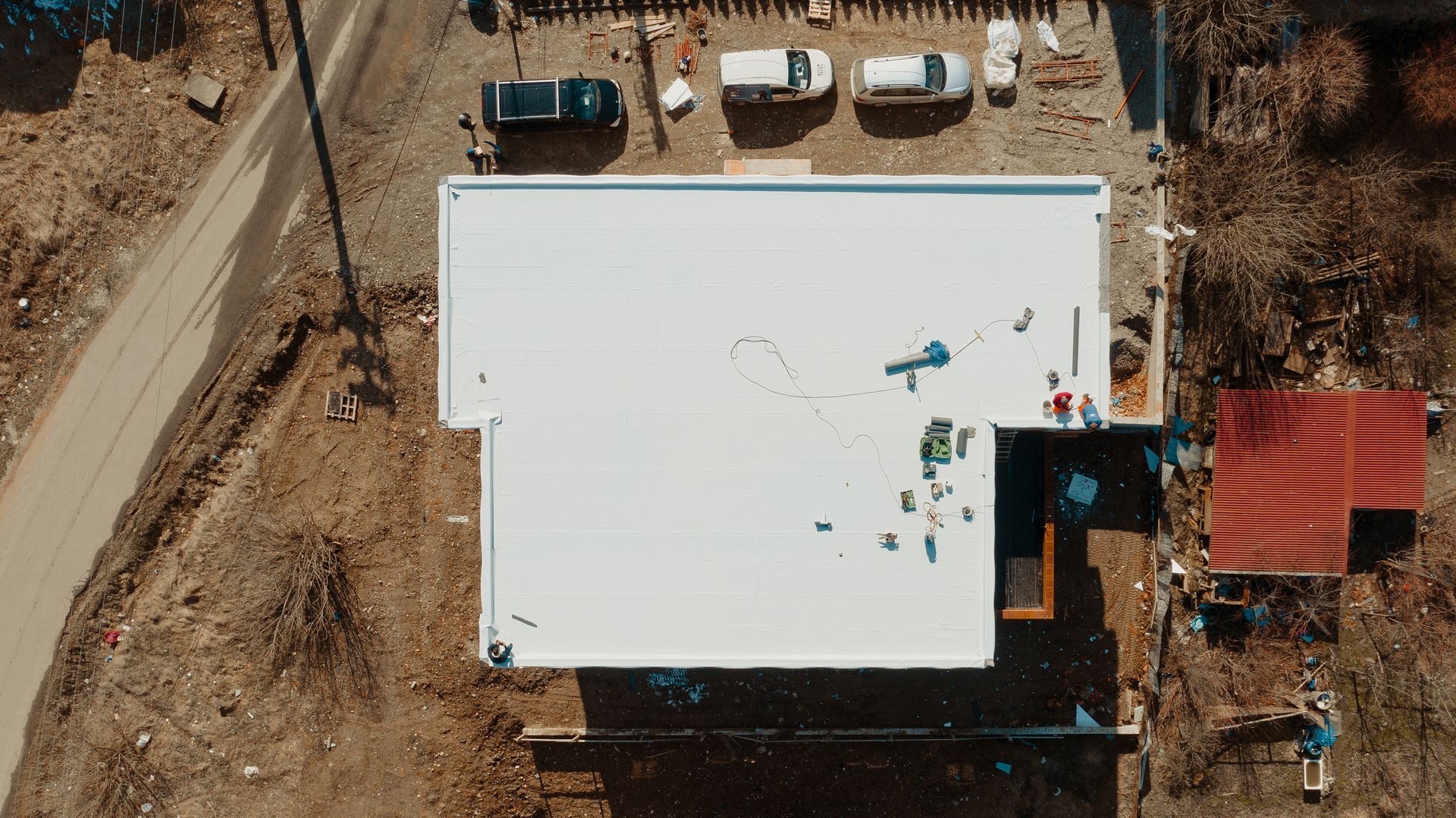
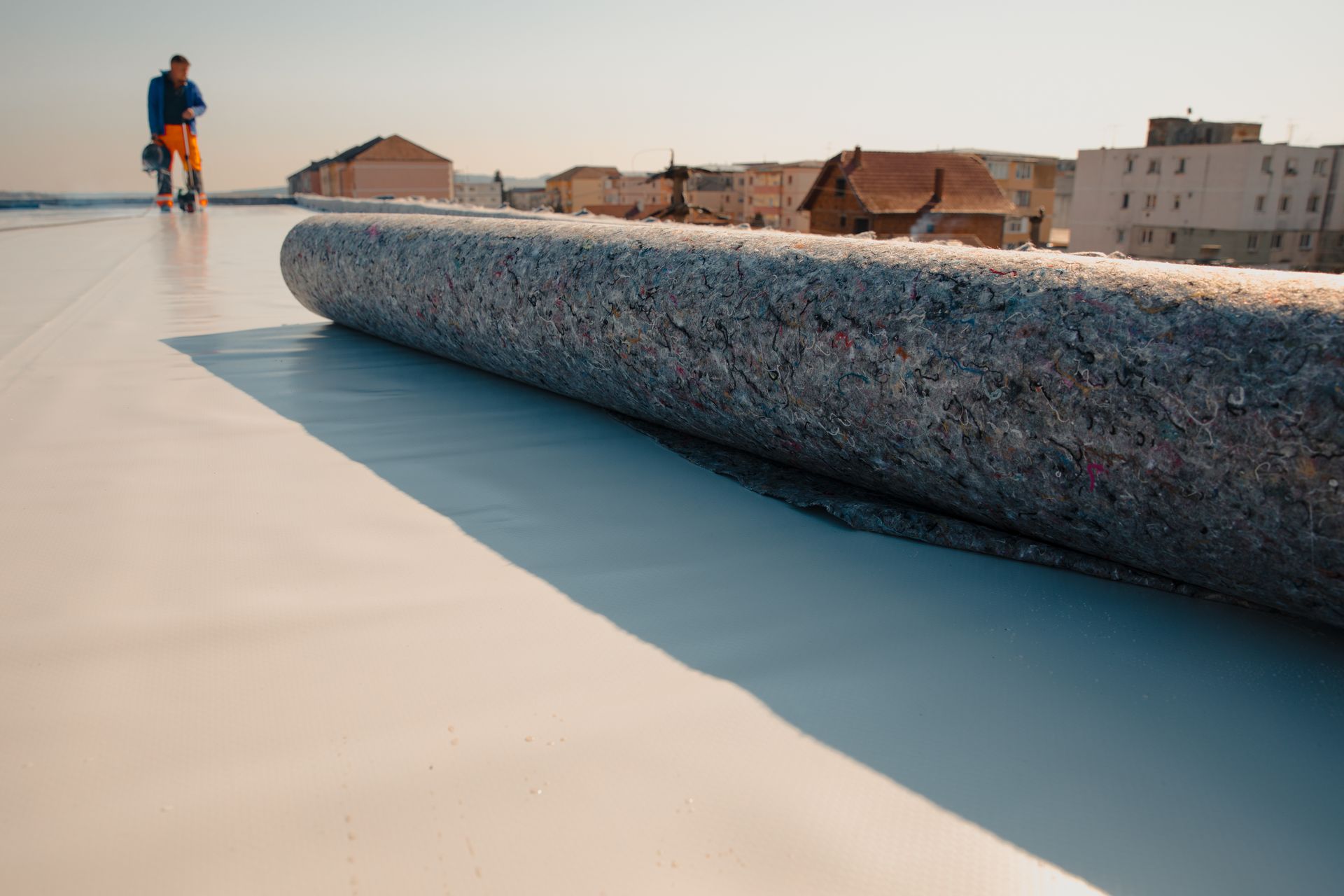
Thermoplastic polyolefin is a thermoplastic, which means it can be re-melted. Sheets are joined with a hot-air welder that fuses the two layers into a single mass, and the resulting seam is typically stronger than the field membrane itself. It is manufactured with a reflective white surface as standard, in thicknesses commonly running 45, 60, and 80 mil.
One piece of history worth knowing, because it still colors opinions: early-generation TPO from the late 1990s and 2000s had real formulation problems and some of those roofs failed prematurely. If someone in your organization remembers TPO badly, that is probably why. Current formulations are a substantially different product.
EPDM
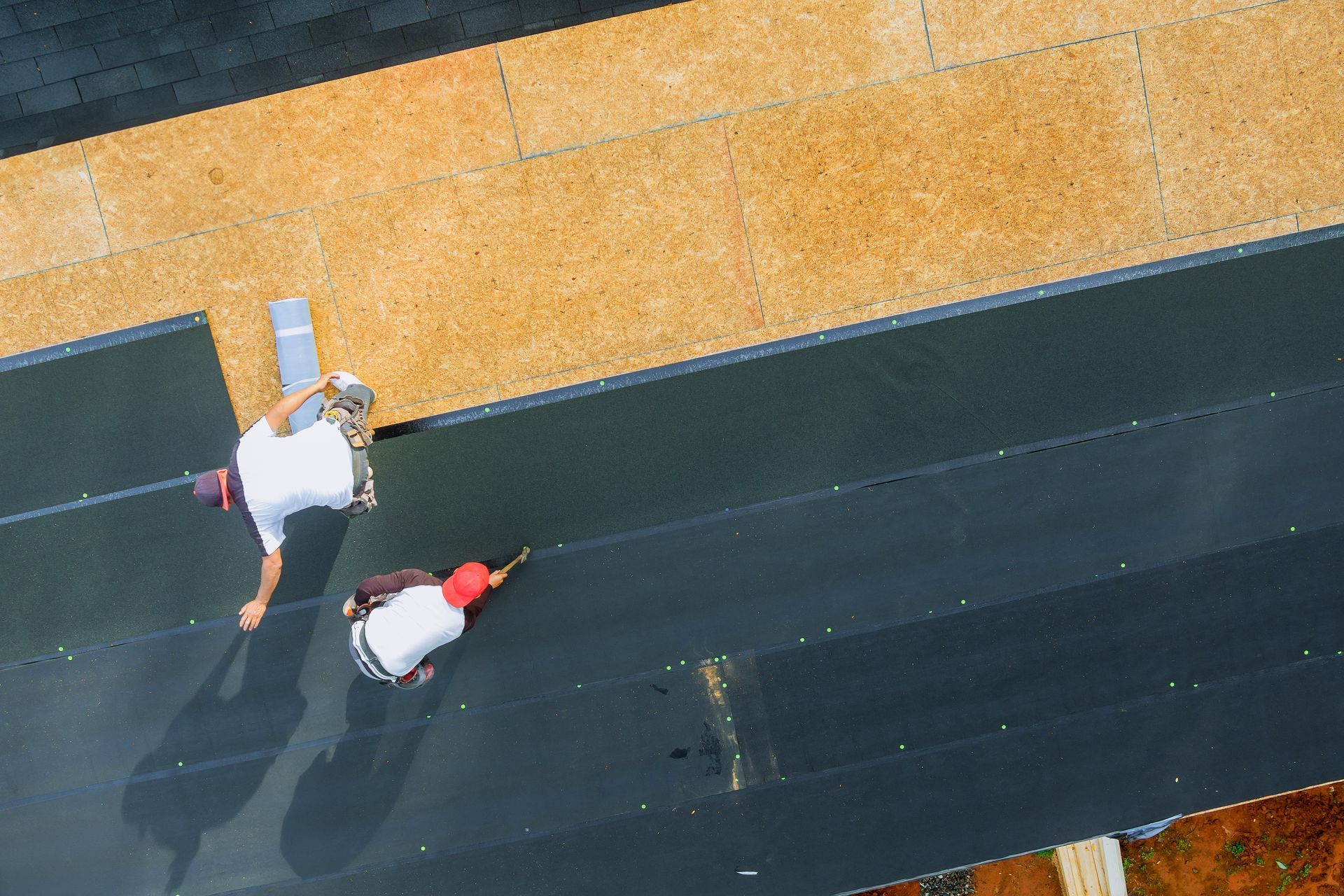
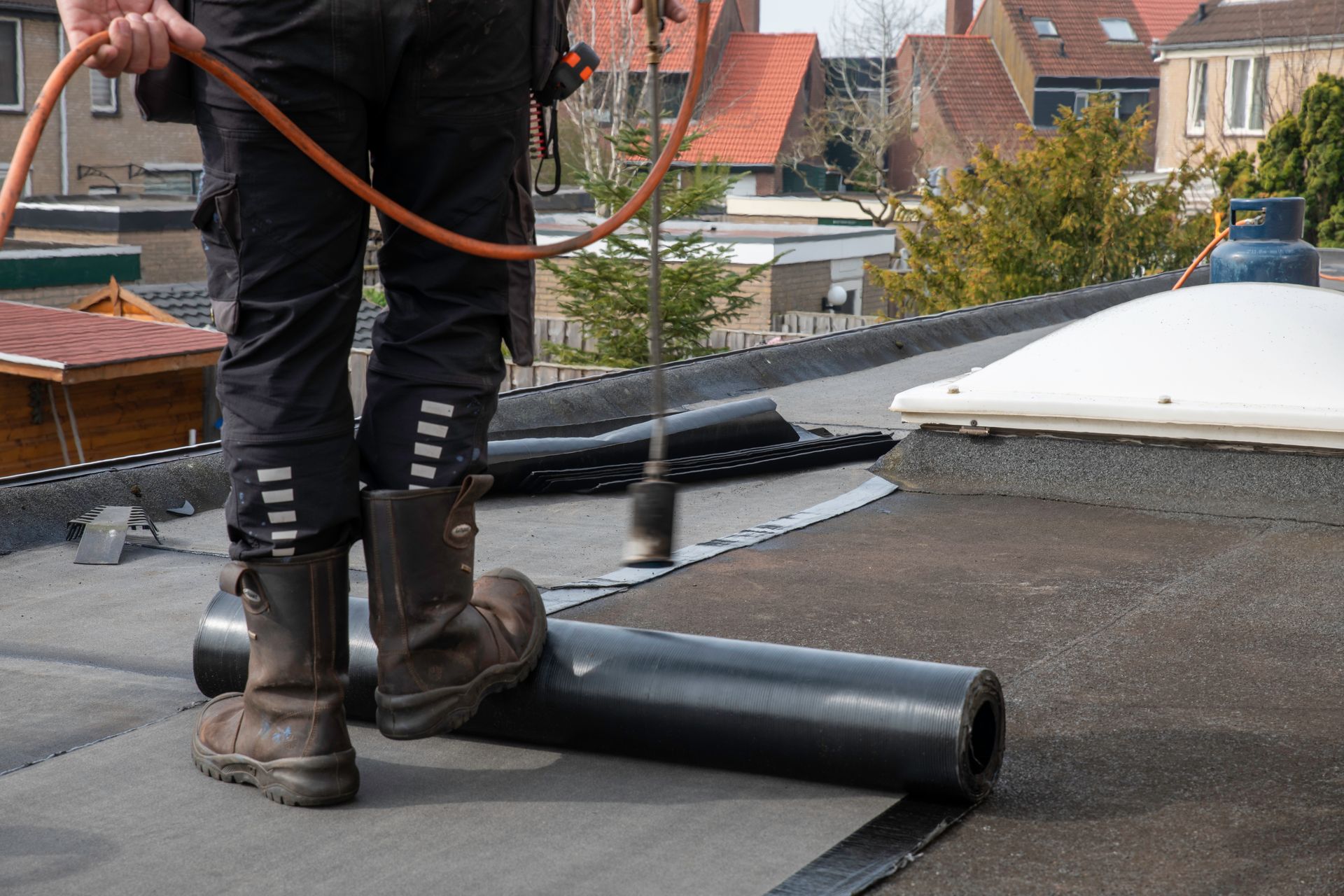
Ethylene propylene diene monomer is a thermoset synthetic rubber, meaning it cures and cannot be re-melted. Sheets are joined with seam tape or adhesive rather than heat. It is black as standard, white is available at a premium, and it comes in wide rolls that cover large open areas with relatively few seams.
EPDM has been on American commercial roofs since the 1960s, so its aging behavior is thoroughly documented. It stays flexible at very low temperatures and handles thermal cycling well, which is exactly what a Connecticut roof does several hundred times a year.
Side-by-side comparison
| Factor | TPO | EPDM |
|---|---|---|
| Seam method | Hot-air welded, fused | Tape or adhesive, bonded |
| Surface | Reflective white standard | Black standard, white costs more |
| Cold flexibility | Stiffens, handle with care below freezing | Stays flexible at low temperatures |
| Puncture and tear resistance | Generally higher at equal thickness | Softer, more prone to punctures from traffic |
| Field repair in winter | Weldable in cold with proper technique | Adhesives and tape have minimum temperatures |
| Typical service life | 20 to 30 years | 25 to 35 years, longer on well-maintained roofs |
| Grease and petroleum resistance | Poor | Poor |
| Installed cost | Slightly higher per square foot | Generally the lower-cost option |
The numbers in that table move with membrane thickness far more than with brand. A 45 mil roof and an 80 mil roof of the same product line are different purchases, and the thickness is where value engineering quietly happens when bids get compared on price alone.
Seams: the difference that matters most
If a single-ply roof leaks, the odds strongly favor a seam, a penetration detail, or a termination. Rarely is it a hole in the middle of the field. So how your membrane joins to itself is not a technical footnote, it is the main event.
A TPO weld is a fusion. Done correctly, at the right temperature and speed, the two sheets become one, and a technician can probe the seam with a hook to verify it on the spot. That testability is a genuine quality-control advantage during installation, and it means a future repair can be welded into the existing roof rather than adhered on top of it.
An EPDM seam is a bond between two cured surfaces using tape or adhesive. When the surface prep is right and the primer is applied properly, it performs for decades. When it is rushed, contaminated, or applied in marginal conditions, it becomes the maintenance item you revisit every few years. Older EPDM roofs installed before modern seam tape are the ones we most often find opening up along the laps.
This is also the reason we push back when an owner wants the cheapest bid on a roof with heavy rooftop equipment. More units means more flashings, more terminations, and more seams, and the seam system you chose becomes the thing you live with.
The Connecticut climate question
Every comparison article ends with the same line: TPO for warm climates, EPDM for cold ones. It is a tidy conclusion built on the idea that a black roof passively heats the building in winter. In our experience that reasoning deserves a much harder look on a Connecticut building.
The black-roof heating argument is weaker than it sounds
During the months when heating actually costs you money here, the roof is frequently under snow, the sun sits low and weak, and daylight hours are short. On top of that, current energy code puts a substantial layer of insulation between the membrane and the building, which is precisely the layer designed to decouple the roof surface from interior temperature. Whatever passive heat gain a black membrane delivers in January is largely intercepted by the insulation you are required to install underneath it.
Cool-roof requirements, meanwhile, are written mainly for the hot southern climate zones, so in Connecticut the reflective TPO surface is a choice rather than a code mandate. If your building has significant cooling load from process equipment, refrigeration, or a large conditioned interior, that white surface earns its keep in July. If your building is a warehouse with minimal cooling, it matters much less.
Winter serviceability is the argument that holds up
Here is what we notice every year. A roof takes a puncture in late January, which is also when snow removal crews and HVAC contractors are up there. On a TPO roof, we bring a welder and make a permanent repair in cold weather. On an EPDM roof, seam tape and adhesives have minimum application temperatures that Connecticut regularly sits below, so a proper permanent repair often waits for warmer weather while a temporary patch holds the line.
Neither system is disqualified by that. It is simply a real operational difference for a facility manager who needs same-week permanent fixes rather than a temporary patch and a spring callback. Our
commercial roof repair work reflects that reality every winter, and it is worth weighing alongside
our snow removal service, since foot traffic during snow events is a common source of the punctures in the first place.
Cost and lifespan expectations
Installed, both systems sit in the lower to middle part of the commercial range, with EPDM generally a little cheaper per square foot and TPO close behind. The insulation package, deck condition, and number of penetrations move a project budget far more than the choice between these two membranes. We break the whole picture down in our commercial roof replacement cost guide.
On lifespan, published expectations run roughly 20 to 30 years for TPO and 25 to 35 for EPDM, and both numbers assume something nobody advertises: that the roof gets inspected and maintained. A neglected 60 mil roof of either type will not outlive a maintained 45 mil one.
The maintenance that actually decides which of those numbers you get:
- Clear the drains and strainers twice a year and after every major storm. Standing water is the fastest way to shorten either membrane.
- Inspect the seams and terminations in spring and fall, since that is where both systems fail first.
- Log and repair punctures promptly. A small puncture is a cheap repair and a wet insulation problem is not.
- Control rooftop traffic. Walk pads at access points and around equipment prevent most of the damage we find on service calls.
- Keep the paperwork. Most manufacturer warranties obligate you to document inspections, and a claim without records is a difficult claim.
When we specify neither one
Two situations come up often enough in Connecticut that they are worth naming.
If your building exhausts cooking grease, meaning a restaurant, a commercial kitchen, a food processing facility, or a tenant space with a hood system, both TPO and EPDM degrade on contact with animal fats and petroleum products. PVC is the membrane formulated to tolerate that exposure, which is why we specify PVC roofing on those buildings rather than trying to protect a TPO roof with splash pads.
If your existing roof is asphalt-based, meaning
built-up roofing or
modified bitumen, and you are recovering rather than tearing off, a separator or cover board is required between the old asphalt and a new single-ply. Putting a membrane directly on asphalt invites plasticizer migration and premature failure. We cover that in more depth in our guide to
commercial roof overlays.
How to choose for your building
TPO usually wins when your building carries meaningful cooling load, the roof is crowded with HVAC units and penetrations where weldable detail work pays off, you want seams that can be probe-tested at installation, or you need permanent repairs available year-round.
EPDM usually wins when the roof is a large open expanse with few penetrations, the budget is tight and the building will be held long term, the deck and structure favor a ballasted assembly, or the building has low cooling demand and you value a membrane whose 40-year aging behavior is fully documented.
Either works when the roof is a straightforward low-slope deck on a conventional building, in which case the installing contractor and the maintenance program will determine the outcome more than the membrane will.
What to ask before you sign
Bids for these systems are easier to compare once you force the same disclosures:
- Membrane thickness in mils, stated for each bid, since 45 and 60 mil are different products at different prices.
- The insulation package, including R-value, board type, and whether a cover board is included.
- Attachment method, meaning mechanically attached, fully adhered, or ballasted, and why that method suits your deck.
- Warranty type and term. Ask specifically whether it is a manufacturer no-dollar-limit warranty or a material-only warranty, and what maintenance it obligates you to perform.
- Who welds or seams. Manufacturer-certified crews are a warranty condition on most NDL programs.
- What the drainage plan is. If your roof ponds today, a new membrane over the same slope will pond tomorrow unless tapered insulation is part of the scope.
Talk through your roof with us
We will walk your roof, look at the deck, the existing assembly, the penetrations, and the drainage, and tell you which system fits the building and the budget. If your current roof has more life in it than you think, we will say that too.
Call International Roofing at
(860) 505-8506 or
request an assessment. You can compare our
TPO roofing systems and
EPDM rubber roofing pages, see
past commercial projects, or read
what property managers say about working with us.
TPO and EPDM FAQs
Which lasts longer, TPO or EPDM?
Published ranges give EPDM a modest edge, roughly 25 to 35 years against 20 to 30 for TPO, and EPDM's longer field history supports that. Maintenance narrows the gap considerably. An inspected, cleaned, and promptly repaired TPO roof routinely outlives a neglected EPDM one.
Is TPO or EPDM better for cold climates?
EPDM handles low temperatures with better flexibility, which is the traditional argument for it here. The counterweight is that TPO can be permanently repaired in cold weather by welding, while EPDM seam adhesives have minimum temperature requirements. Both systems are installed successfully across Connecticut every year.
Can you install TPO over an existing EPDM roof?
Sometimes, with a separator or cover board and provided the existing assembly is dry and structurally sound. Membrane-on-membrane recovers have specific manufacturer requirements, and the wet insulation question has to be answered first with a moisture survey.
Does a white TPO roof actually lower energy costs in Connecticut?
It reduces cooling load in summer, which matters most for buildings with real cooling demand such as refrigerated space, process equipment, or large conditioned interiors. For an unconditioned warehouse the savings are modest, and the insulation package will do far more for the energy bill than the membrane color.
How do I know which system is on my building right now?
Black rubber that feels flexible and shows taped laps is EPDM. A lighter-colored sheet with welded laps that appear fused rather than taped is TPO. A roof inspection will confirm it, along with thickness, attachment method, and the condition of the insulation underneath.
Recent Posts