How Do Flat Roofs Drain? Commercial Roof Drainage Systems Explained
October 13, 2026

Flat commercial roofs are not truly flat. They are built with a slight slope, often around a quarter inch per foot, that moves water toward one of three drainage paths: interior drains that carry water down through pipes inside the building, scuppers that let water out through openings in the parapet walls, or gutters and downspouts along the roof edge. Tapered insulation and crickets help steer water toward those outlets. When any part of that system is blocked, undersized, or pitched wrong, water collects in ponds, adds weight, wears out the membrane, and eventually finds its way inside.
International Roofing LLC is a commercial roofing contractor based in Berlin, Connecticut, focused entirely on commercial roofing. We install, repair, and maintain TPO, EPDM, PVC, modified bitumen, built-up, and metal roofs on warehouses, office buildings, retail plazas, manufacturing facilities, and multi-family properties across Central Connecticut and Hartford County. Drainage problems are among the most common issues we diagnose, and this guide explains how commercial roof drainage works and what goes wrong.
In This Guide
- Why Flat Roofs Still Need Slope: How water is moved.
- The Three Main Drainage Systems: Drains, scuppers, and gutters.
- Interior Drains: How they work and fail.
- Scuppers: Openings through the parapet.
- Gutters and Downspouts: Edge drainage.
- Tapered Insulation and Crickets: Shaping the roof.
- Overflow and Secondary Drainage: The backup system.
- Ponding Water: When Drainage Fails: Causes and risks.
- How Roof Drainage Is Sized: Design basics.
- Signs Your Roof Drainage Is Failing: What to watch for.
- A Simple Drainage Maintenance Routine: Prevention.
- Drainage in Connecticut Winters: Ice and meltwater.
- Frequently Asked Questions: Quick answers.
Why Flat Roofs Still Need Slope
The term "flat roof" really means low-slope roof.
Minimum Slope
Building codes and roofing manufacturers generally call for a minimum slope on low-slope roofs, commonly a quarter inch of fall per foot, so water moves toward drains rather than sitting on the surface. That slope is barely visible, but it makes a big difference.
How Slope Is Created
Slope can be built into the structure, with the deck itself sloped, or created on top of a flat deck using tapered insulation boards. Many older Connecticut commercial buildings have structurally flat decks, so tapered insulation is often added during reroofing to improve drainage.
Why Some Roofs Drain Poorly
Roofs that were built dead flat, roofs where the structure has deflected over time, and roofs with added equipment or patched areas can develop low spots that hold water. These are often the first places to leak.
The Three Main Drainage Systems
Most commercial roofs use one or a combination of these systems.
| Drainage System | How It Works | Common On |
|---|---|---|
| Interior drains | Drain bowls in the roof field connect to pipes running down inside the building | Large roofs, warehouses, office buildings |
| Scuppers | Openings through the parapet wall let water flow off the roof edge | Buildings with parapet walls, often paired with collector boxes and downspouts |
| Gutters and downspouts | Water runs off the roof edge into gutters and down to the ground | Smaller commercial buildings and roofs without parapets |
Each has strengths and weaknesses, and the right choice depends on the building's size, shape, and structure.
Interior Drains
Interior drains are common on large commercial roofs because they can be placed in the middle of the roof where water naturally collects.
How They Work
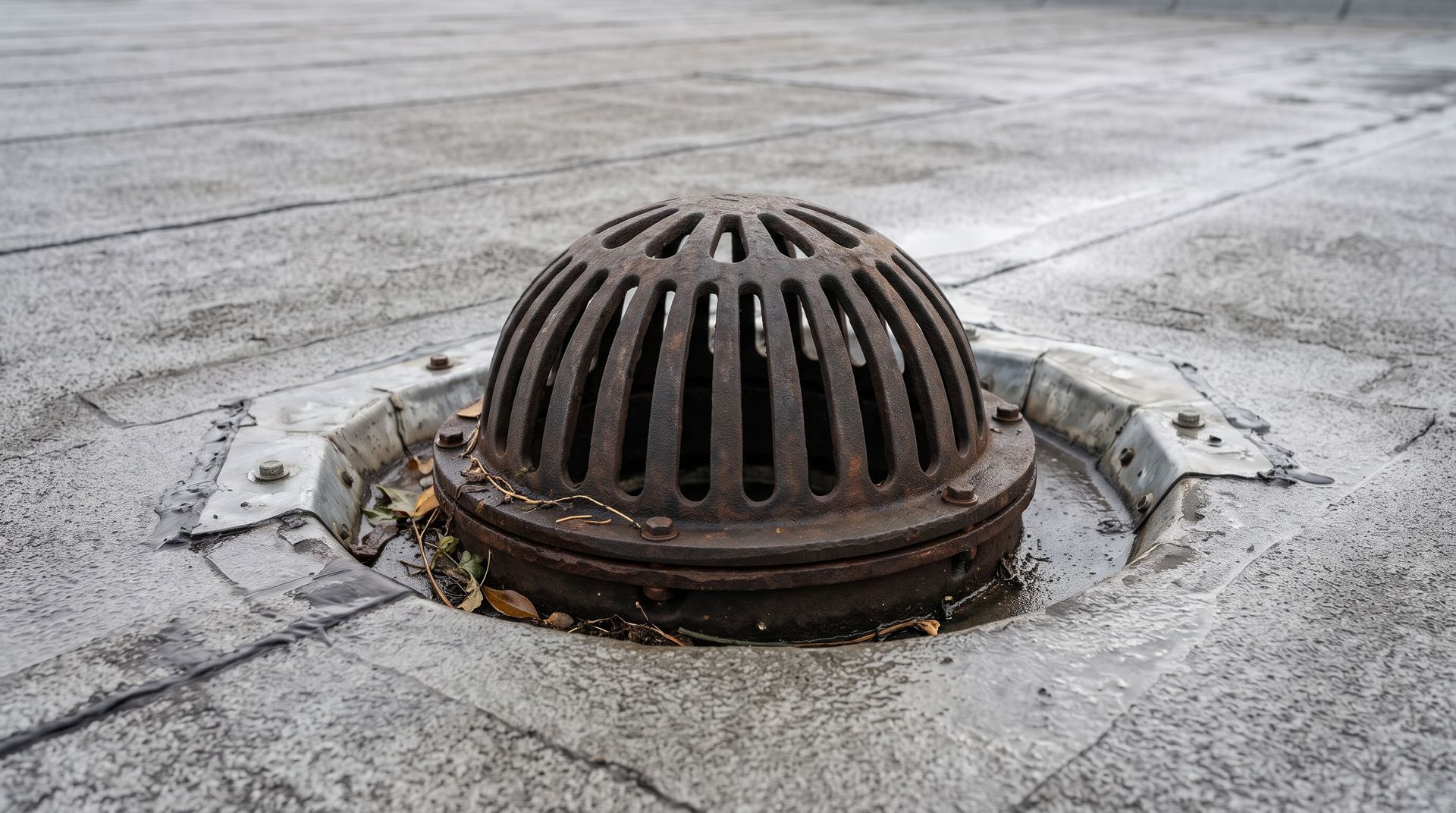
A drain bowl is set into the roof deck at a low point, and the roof membrane is sealed to it with a clamping ring. A strainer or dome sits on top to keep debris out. Water flows into the bowl and down through drain pipes inside the building to the storm system. Because the pipes run through heated space, interior drains keep working in cold weather better than exterior outlets.
Advantages
Interior drains are protected from the weather, so they are less likely to freeze than exterior drainage. They are also out of sight and do not affect the building's appearance.
Common Problems
- Clogged strainers from leaves, debris, and gravel.
- Missing strainers, which lets debris enter the pipe and cause internal clogs.
- Leaks at the clamping ring where the membrane meets the drain bowl.
- Drains set too high, so water ponds around them instead of draining.
- Damaged or disconnected interior piping that leaks inside the building.
Scuppers
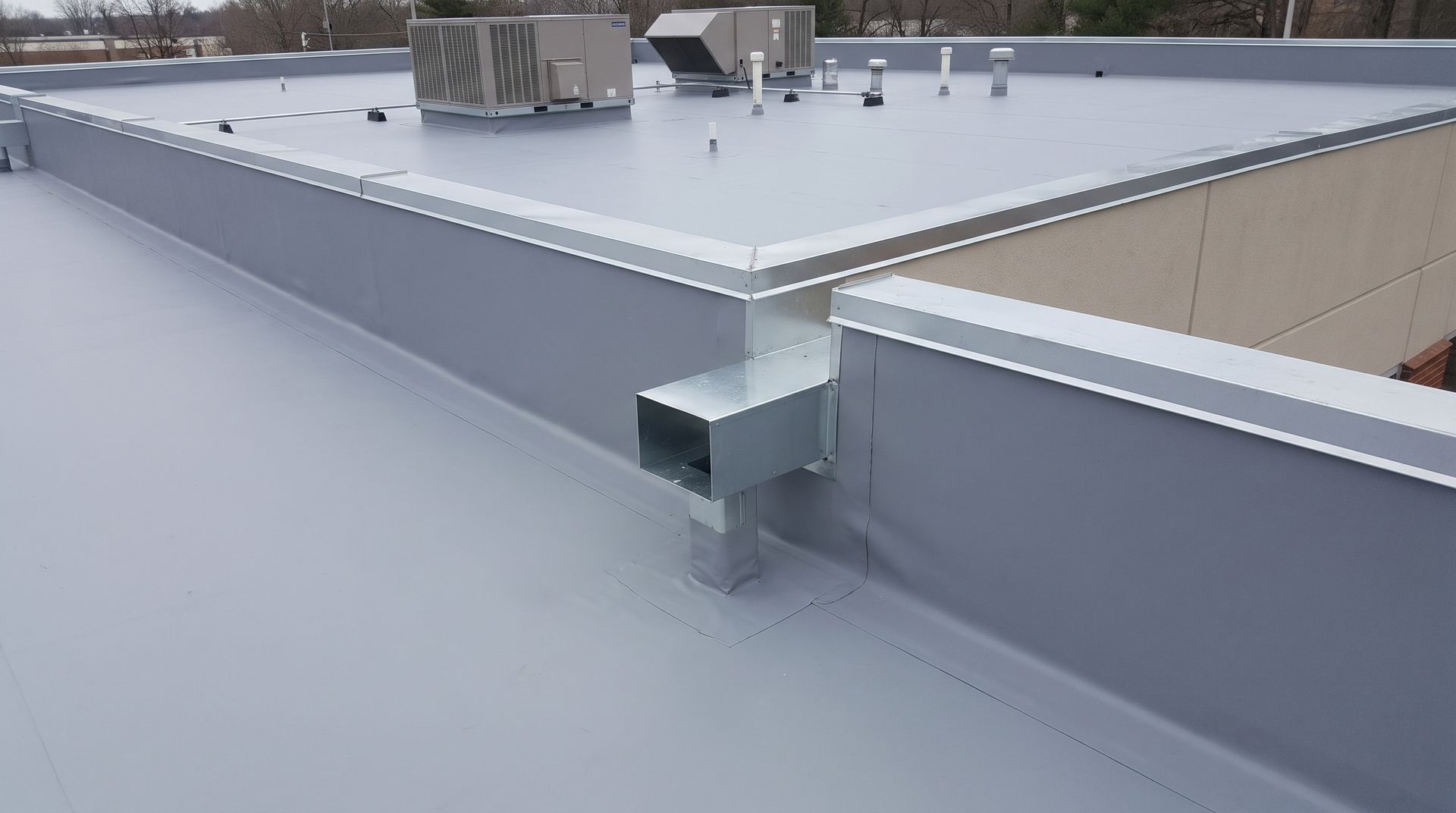
Scuppers are openings through the parapet wall at roof level.
How They Work
Water flows across the roof to the parapet and out through the scupper. It usually drops into a collector box or conductor head mounted on the outside wall, then down a downspout.
Advantages
Scuppers are simple, visible, and easy to inspect. They are also commonly used as overflow outlets set slightly above the main roof level.
Common Problems
Scuppers can clog with debris and ice, and the flashing where the scupper passes through the wall is a common leak point. Undersized scuppers can also back up during heavy rain.
Gutters and Downspouts
Some commercial roofs drain off the edge into gutters, similar to a house but on a larger scale.
How They Work
The roof slopes toward one or more edges, where water runs into large commercial gutters and down through downspouts.
Advantages
Gutters are easy to access and inspect and are common on smaller commercial buildings, strip plazas, and multi-family properties.
Common Problems
Commercial gutters can clog, sag, or pull away from the building under the weight of ice and snow. Water overflowing at entrances can create ice hazards for tenants and customers.
Tapered Insulation and Crickets
Getting water to the drains is just as important as the drains themselves.
Tapered Insulation
Tapered insulation is installed in sloped boards that create a gradual pitch across the roof toward drains or scuppers. It adds insulation value while improving drainage, and it is one of the most effective ways to correct ponding on an older roof.
Crickets and Saddles
Crickets are small sloped sections that divert water around obstacles, such as rooftop HVAC curbs, or between drains. They are especially important behind large units and chimneys. Without crickets, water often collects on the uphill side of equipment and parapet walls.
When to Add Them
Tapered insulation and crickets are most often added during a full roof replacement or overlay. Our guide to
what a roof overlay is explains when adding a new layer makes sense, and our
commercial roof replacement page covers full replacement.
Overflow and Secondary Drainage
Primary drains can clog or freeze. Overflow drainage is the backup.
Why It Matters
If water cannot leave the roof, it builds up and adds weight. Building codes generally require secondary or overflow drainage on roofs with parapets or other edges that could trap water. Overflow drains or scuppers are set slightly higher than the primary drains so they only carry water when the main system cannot keep up.
Common Mistakes
Overflow scuppers that are blocked, covered during repairs, or set too high can leave a roof without protection when it is needed most. They should be inspected along with primary drains.
Ponding Water: When Drainage Fails
Ponding water is the most visible sign of a drainage problem.
What Counts as Ponding
The roofing industry generally considers water still standing on a roof about 48 hours after rain to be ponding. Small, shallow puddles that evaporate quickly are usually not a concern.
Why Ponding Is a Problem
- Membrane wear. Standing water speeds up aging of many roofing materials.
- Leaks. Ponds put constant pressure on seams and small defects.
- Weight. Water is heavy, and large ponds add significant load to the structure.
- Debris and growth. Ponds collect dirt and can support algae and vegetation.
- Warranty issues. Some manufacturer warranties exclude damage from ponding.
- Winter ice. Ponds freeze into ice sheets that stress the roof and create hazards for workers.
Fixing Ponding
Solutions include clearing and lowering drains, adding drains, installing tapered insulation or crickets, and correcting structural deflection. The right fix depends on why the water is collecting.
How Roof Drainage Is Sized
Drainage systems are designed, not guessed.
What Designers Consider
Roof drains, scuppers, and gutters are sized based on the area of roof they serve and the design rainfall intensity for the location, following the plumbing and building codes. Larger roof areas and heavier design storms require more or larger outlets.
Why Older Buildings Fall Short
Many older commercial buildings in Connecticut have been altered over the years. New rooftop equipment, additions, or reroofing can change how water flows, and drainage that once worked may no longer keep up. When a roof is replaced, it is a good time to have the drainage layout reviewed.
Adding Drains
Adding a new interior drain or scupper is a significant project involving the roof, the structure, and often interior piping. It is usually most practical during a replacement or major repair.
Signs Your Roof Drainage Is Failing
Watch for these signs on the roof and inside the building:
- Water standing on the roof two days or more after rain.
- Dirt rings or stains on the membrane where ponds have dried.
- Vegetation or algae growing in low areas or around drains.
- Water backing up at scuppers or overflowing gutters during storms.
- Leaks near drains, scuppers, or along low parapet walls.
- Ice buildup in the same areas every winter.
- Interior stains directly below drain locations.
Any of these is a reason to have the drainage inspected before the next heavy storm or freeze.
A Simple Drainage Maintenance Routine
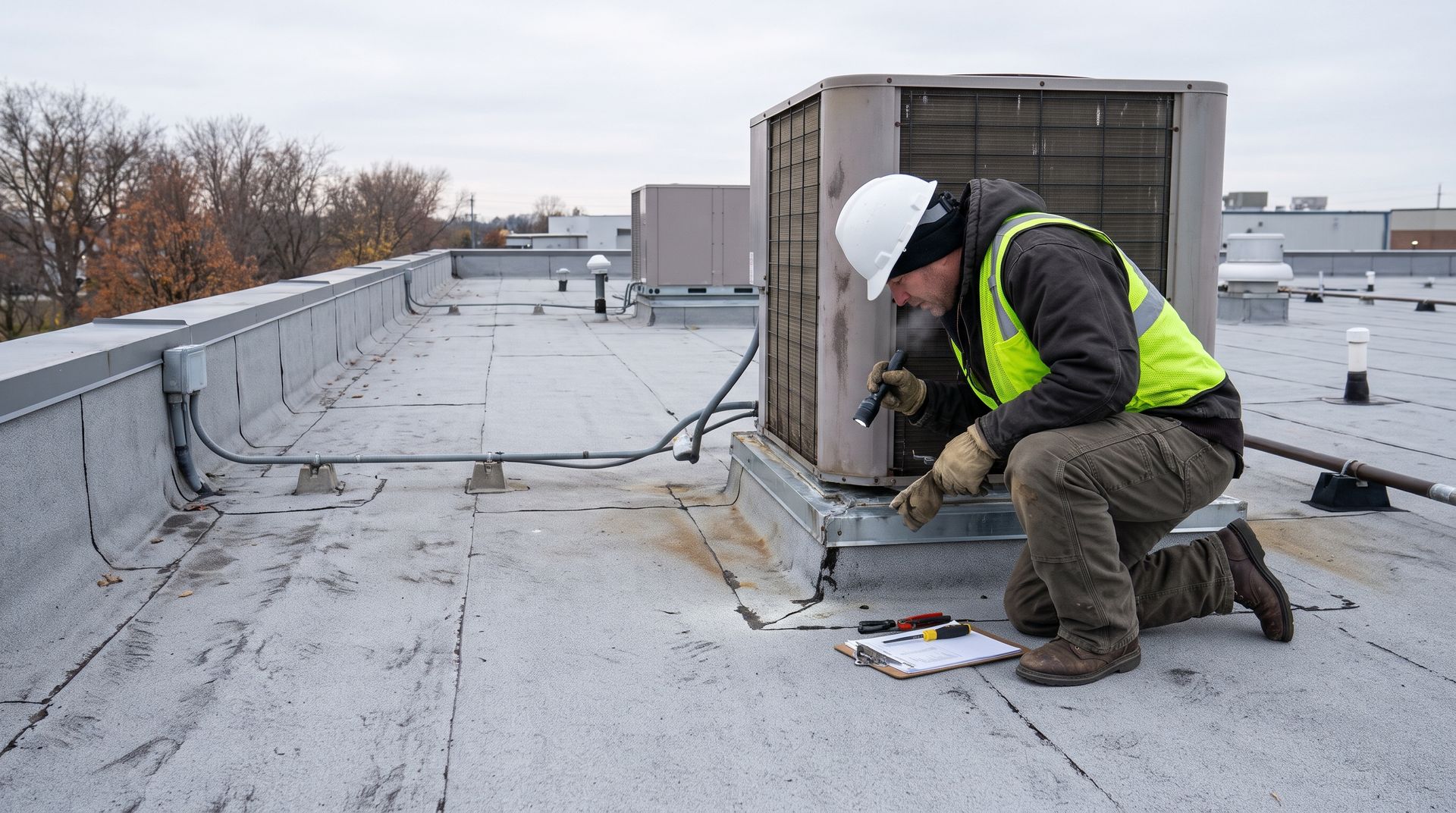
Most drainage problems can be prevented with routine attention. Check and clear drains, scuppers, and gutters at least in spring and fall, and again after major storms or heavy leaf drop. Make sure strainers and domes stay in place. Watch for ponding after rain and note any changes. Keep rooftop contractors from leaving debris near drains. A few minutes of attention a season can prevent the backups that cause most drainage-related leaks.
Drainage in Connecticut Winters
Winter is when drainage systems are tested hardest.
Frozen Outlets
Scuppers, collector boxes, gutters, and downspouts on the exterior of the building can freeze solid. When they do, meltwater backs up on the roof and can work its way under flashings.
Meltwater and Refreezing
Snow on a roof melts during sunny days and refreezes at night. If drains are blocked, that meltwater has nowhere to go and forms ice in low areas.
Preparing Before Winter
Clearing every drain, scupper, and gutter before winter is one of the most valuable tasks a building owner can schedule. Our
commercial roof maintenance checklist explains the full pre-winter routine, and our team also offers
commercial roof snow removal
when snow builds up.
Drainage and Your Roofing System
Different membranes handle standing water differently, but none of them benefit from it. Single-ply membranes like TPO, PVC, and EPDM depend on sound seams, and ponding stresses those seams over time. Modified bitumen and built-up roofs can blister and deteriorate faster under water. Our comparison of
TPO vs. EPDM
and our pages on
roofing systems explain how each material performs.
Get Your Roof Drainage Evaluated
If your roof has ponding water, slow drains, or recurring leaks near drains and scuppers, our team can inspect the drainage system, find the cause, and recommend a practical fix. Learn more about our commercial roof repair and roof maintenance services, or read our reviews.
Call International Roofing LLC at (860) 505-8506 or
contact us. We serve commercial property owners and facility managers throughout Central Connecticut and Hartford County.
Frequently Asked Questions
How do flat roofs drain water?
Flat roofs are built with a slight slope that moves water to interior drains, scuppers through parapet walls, or gutters at the roof edge. Tapered insulation and crickets help direct water to those outlets.
How much slope does a flat roof need?
Many codes and manufacturers call for a minimum slope of about a quarter inch per foot on low-slope roofs so water drains instead of ponding. Specific requirements depend on the roofing system and local code.
Is standing water on a flat roof normal?
Small puddles that dry within a day or two are common. Water that remains about 48 hours after rain is considered ponding and should be evaluated, since it can shorten roof life and add weight.
What is a roof scupper?
A scupper is an opening through a parapet wall that lets water drain off the roof edge, usually into a collector box and downspout. Scuppers are also commonly used as overflow outlets.
Do commercial roofs need overflow drains?
Many do. Building codes generally require secondary or overflow drainage on roofs where parapets or edges could trap water if the primary drains become blocked.
Recent Posts