Commercial Roof Maintenance Checklist: Prepare Your Building for Winter
October 27, 2026

Before a Connecticut winter, a commercial roof should be cleared of debris, have every drain, scupper, and gutter flowing freely, have its seams, flashings, and penetrations sealed, and have any soft spots, punctures, or ponding areas repaired while temperatures still allow. Rooftop equipment curbs, edge metal, and coping should be secured against winter wind, and a snow plan should be in place before the first storm. Fall is the last practical window to do this work: many membrane repairs, sealants, and adhesives need moderate temperatures and dry conditions that become hard to find after November.
International Roofing LLC is a commercial roofing contractor based in Berlin, Connecticut, and commercial roofing is all we do. We maintain, repair, and replace TPO, EPDM, PVC, modified bitumen, built-up, and metal roofs on warehouses, office buildings, retail plazas, manufacturing facilities, and multi-family properties across Central Connecticut and Hartford County, and we provide commercial roof snow removal in winter. This checklist reflects the pre-winter work our crews do every fall.
In This Guide
- Why Fall Is the Deadline for Roof Maintenance: Temperature and timing.
- The Pre-Winter Checklist at a Glance: Every task in one table.
- Clear the Roof and Open Every Drain: The first priority.
- Close Up the Membrane: Seams, punctures, and blisters.
- Seal Flashings and Penetrations: Where winter leaks start.
- Secure Edges and Rooftop Equipment: Wind and ice protection.
- Plan for Snow Before It Falls: Access, removal, and monitoring.
- Check Inside the Building: The roof from below.
- Properties With Extra Winter Risk: Warehouses, retail, and more.
- Who Should Do Pre-Winter Maintenance?: Staff vs. professionals.
- Document Everything for Warranty and Insurance: Records that protect you.
- Frequently Asked Questions: Quick answers.
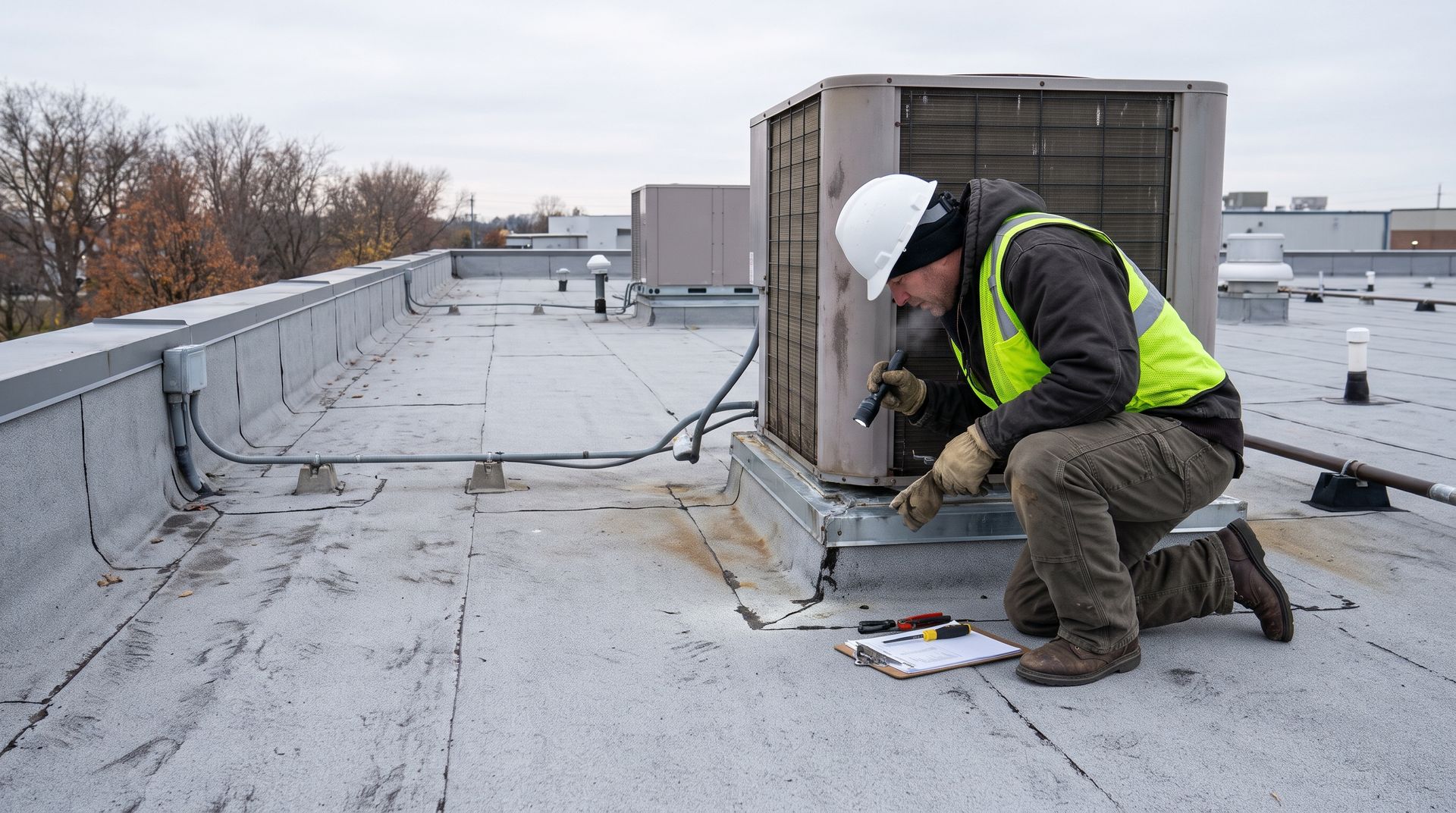
Why Fall Is the Deadline for Roof Maintenance
Most commercial roof problems that show up in January started as small issues in September.
Materials Need the Right Conditions
Membrane welding, adhesives, primers, and sealants all have temperature and moisture limits. Many work best above roughly 40 to 50 degrees and on dry surfaces. Once Connecticut nights drop below freezing and roofs are wet with frost or snow, some repairs become temporary patches until spring.
Small Defects Grow in Winter
An open seam or a pinhole in flashing might let in a little water in October. In winter, that water freezes, expands, and works the opening wider. Meltwater during thaws then finds the same path. A repair that would have taken an hour in the fall can turn into ceiling damage, wet insulation, and a larger repair by March.
Contractor Schedules Fill Up
After the first major storm, every roofer in the region is responding to leaks. Scheduling maintenance in September and October means getting the work done on your timeline rather than waiting in an emergency queue.
The Pre-Winter Checklist at a Glance
| Area | Pre-Winter Task | Why It Matters in a Connecticut Winter |
|---|---|---|
| Drains and scuppers | Clear debris, test flow, confirm strainers are in place | Blocked drains freeze and back water up under flashing |
| Gutters and downspouts | Clean, re-secure, check for separation | Ice-filled gutters pull away and dump water at doors |
| Membrane | Repair punctures, open seams, and blisters | Water in small openings freezes and widens them |
| Flashings | Reseal base flashing, counterflashing, and terminations | Parapet and wall transitions are top leak points |
| Penetrations | Check pipe boots, pitch pans, and vents | Freeze-thaw cracks old sealant |
| Edge metal and coping | Re-fasten loose sections | Winter wind can peel back loose edges |
| Rooftop equipment | Inspect curbs, condensate lines, and access panels | Frozen condensate and loose panels damage the roof |
| Walkway pads and access | Confirm safe access routes and hatches | Crews need safe paths for snow removal and service |
| Snow plan | Identify drift zones and removal contacts | Reduces risk from heavy snow loads |
| Interior | Look for stains, wet insulation, and rust | Shows leaks the roof surface hides |
Clear the Roof and Open Every Drain
If you only have time for one pre-winter task, make it this one. Flat and low-slope roofs depend on drains to move water, and winter makes every partial blockage worse.
What to Do
- Remove leaves, branches, and debris from the entire roof surface, especially near parapets and inside corners.
- Clear interior drains and check that drain strainers and domes are present and secure.
- Flush scuppers and downspouts to confirm water moves freely all the way to the ground.
- Clear overflow drains and overflow scuppers, which are your backup when primary drains freeze.
- Look for ponding areas that have not drained within a couple of days after rain.
Why It Matters
A drain that is slow in October often freezes solid in January. Meltwater then pools and can back up under flashing at the low points of the roof. Our guide on
how flat roofs drain explains how interior drains, scuppers, and gutters work together.
Close Up the Membrane
The roof membrane needs to go into winter without openings.
Single-Ply Roofs (TPO, PVC, EPDM)
Check seams and laps for separation, especially at corners and around penetrations. Look for punctures from foot traffic and dropped tools, shrinkage pulling the membrane away from walls and curbs, and surface cracking on older sheets. Patches on TPO and PVC are typically heat-welded, while EPDM repairs use compatible tapes and adhesives. Our comparison of TPO vs. EPDM explains how these systems differ.
Modified Bitumen and Built-Up Roofs
Look for blisters, splits, alligatored surfaces, and areas where granules or gravel have worn away. Open laps and cracked flashings should be repaired before cold weather makes the material brittle.
Soft Spots
Spongy areas underfoot usually mean wet insulation below the membrane. Wet insulation loses its insulating value, adds weight, and can freeze. It should be investigated and, if needed, replaced before winter.
If the Roof Is Near the End of Its Life
When repairs are adding up, fall is also the time to plan. A roof recoating, a roof overlay, or a spring replacement may make more sense than repeated patching.
Seal Flashings and Penetrations
Most winter leaks we respond to start at transitions, not in the middle of the roof.
Flashings
Check base flashing along parapet walls, curbs, and building walls for separation, open seams, and loose terminations. Inspect counterflashing and reglets for gaps where water can enter behind the flashing.
Penetrations
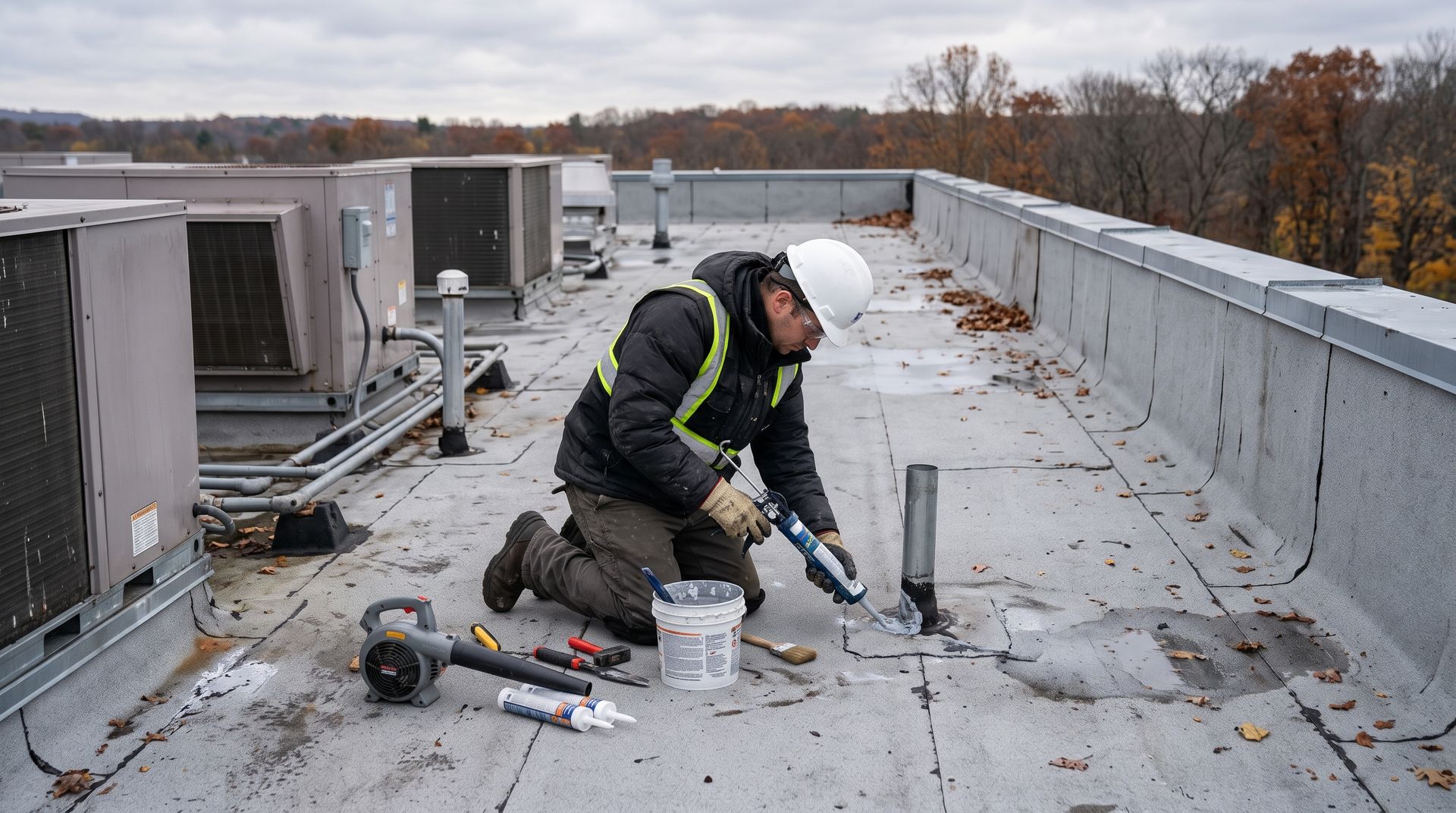
Inspect pipe boots, pitch pans, vent stacks, conduit penetrations, and skylight curbs. Sealant that looked fine in spring may have cracked over a hot summer. Pitch pans should be topped off with compatible filler.
Sealant Is a Maintenance Item
Caulk and sealant are not permanent repairs. Where the same flashing has been resealed several times, the flashing itself may need to be rebuilt.
Secure Edges and Rooftop Equipment
Edge Metal and Coping
Winter storms bring strong gusts, and loose edge metal is often where wind gets under the roof. Re-fasten loose sections and check joints in coping caps. Gaps at coping joints also let water run down behind the wall flashing.
HVAC Units and Curbs
Check that equipment curbs are properly flashed and that access panels are closed and secure. Make sure condensate lines drain where they should, not onto the membrane, where they can form ice.
Satellite Dishes, Signs, and Other Additions
Items added to the roof over the years are frequent sources of leaks and wind damage. Confirm they are anchored properly without penetrating the membrane in ways that were never flashed.
Walkway Pads and Hatches
Confirm walkway pads are in place along service routes, and that roof hatches open, close, and seal properly. Winter service calls and snow removal crews will rely on them.
Plan for Snow Before It Falls
You do not need to calculate snow loads in October, but you do need a plan.
Know Your Risk Areas
Snow tends to drift and pile up against parapets, around rooftop equipment, and on lower roof sections next to taller walls. Those are the areas that load up first in a heavy storm. Our snow removal team pays special attention to them after major storms.
Decide Who Will Respond
Identify who will monitor the roof after storms, when professional snow removal should be called, and how crews will safely access the roof. Having a contractor lined up before the season is far easier than finding one during a storm. Learn more about our commercial roof snow removal.
Protect the Membrane
Snow removal done carelessly can puncture or tear a roof. Plastic shovels, leaving a few inches of snow on the surface, and avoiding metal tools near seams and flashings help prevent damage.
Check Inside the Building
The underside of the roof often tells you more than the top.
What to Look For
Walk the top floor and look for stained or sagging ceiling tiles, damp or compressed insulation, rust on the steel deck or joists, and musty odors. Mark any stain on a simple roof plan so it can be matched to a location on the roof. Photos help too.
Why It Matters Before Winter
A slow leak you can live with in the fall can become a serious problem once ice dams and meltwater add volume. Finding it now gives you time to repair it before freezing weather.
Properties With Extra Winter Risk
Every flat roof needs pre-winter attention, but some buildings deserve a closer look.
Warehouses and Distribution Centers
Large, wide roofs collect a lot of water and snow, and a single blocked drain can affect a big area. Long spans also make it important to watch for ponding and deflection.
Retail Plazas
Multiple tenants often mean multiple HVAC units, signs, and penetrations added over the years by different contractors. Those additions are common leak points and should be checked one by one.
Manufacturing Facilities
Exhaust fans and process vents can discharge heat, moisture, or residue onto the roof. Those areas wear faster and can create localized ice in winter.
Multi-Family Buildings
Leaks in apartment buildings affect residents quickly. Roof drains, hatches, and areas above top-floor units should be prioritized.
Who Should Do Pre-Winter Maintenance?
Facility staff can handle simple tasks like checking interior ceilings and keeping an eye on drains after storms, if roof access is safe. Work on the roof itself, especially near edges, skylights, and hatches, involves fall hazards and should follow OSHA safety requirements. Membrane repairs, flashing work, and drain clearing at height are best handled by a commercial roofing contractor who can also document the roof's condition for your records.
Document Everything for Warranty and Insurance
Good records protect your roof investment.
Warranty Requirements
Many commercial roof warranties expect regular maintenance and may exclude damage caused by neglect. Dated photos and maintenance reports show the roof was cared for.
Insurance Claims
If winter weather damages the roof, a documented pre-winter inspection helps establish the roof's condition before the storm. Our guide to commercial roof storm damage covers what to do after severe weather.
Planning and Budgeting
Tracking repairs year over year helps you plan for recoating or replacement before a failure forces the decision. Our guides to
commercial roof inspection cost and
commercial roof replacement cost can help with budgeting.
Schedule Your Pre-Winter Roof Maintenance
If your building's roof has not been serviced since spring, now is the time. Our team can inspect the roof, clear drains, complete repairs while conditions allow, and document everything for your records. Learn more about our commercial roof maintenance and commercial roof repair services, or read our reviews.
Call International Roofing LLC at (860) 505-8506 or
contact us. We serve commercial property owners and facility managers throughout Central Connecticut and Hartford County.
Frequently Asked Questions
When should commercial roof maintenance be done before winter?
Ideally in September or October in Connecticut. Many membrane repairs, sealants, and adhesives need moderate temperatures and dry conditions, which become harder to find in late fall and winter.
What is the most important pre-winter roof task?
Clearing drains, scuppers, and gutters. Blocked drainage is one of the leading causes of winter leaks on flat and low-slope roofs, because water backs up and freezes instead of leaving the roof.
Can commercial roofs be repaired in winter?
Some repairs can be made in winter, especially emergency repairs, but many products have temperature limits. Winter repairs are often temporary until conditions allow a permanent fix in spring.
How do I know if my roof has wet insulation?
Soft or spongy areas underfoot, interior stains, and rust on the deck are common signs. Infrared or moisture scans during an inspection can locate wet insulation more precisely.
Do commercial roof warranties require maintenance?
Many do. Warranties often require regular inspections and maintenance and may exclude damage caused by neglect. Keeping dated maintenance records helps protect your coverage.
Title or Question
Describe the item or answer the question so that site visitors who are interested get more information. You can emphasize this text with bullets, italics or bold, and add links.
Recent Posts