Commercial Roof Storm Damage: What to Check After Severe Weather
July 26, 2026

After a severe storm, check your commercial roof for punctures and tears in the membrane, lifted or loose flashing, blocked or damaged drains, debris on the surface, ponding water, and interior signs like ceiling stains or leaks. The safest first step is a ground-level and interior check, followed by a professional inspection before you or anyone else walks the roof. Documenting the damage with photos right away is critical for insurance. Acting quickly keeps minor storm damage from turning into major water intrusion.
At International Roofing LLC, we inspect and repair commercial roofing systems across Connecticut, responding to storm damage on TPO, PVC, EPDM, modified bitumen, built-up, and metal roofs after the severe weather our region regularly sees. Because we handle these calls after every major storm, the checklist below reflects what actually matters most when assessing commercial roof damage here.
Start with the checklist, then work through what to look for and what to do.
In This Guide
- The post-storm checklist: What to check, at a glance.
- Signs of damage on the roof: Membrane, flashing, and drains.
- Signs of damage from inside: Clues visible from the ground.
- What causes commercial storm damage: Wind, hail, and debris.
- Storm damage types at a glance: Damage, cause, and urgency.
- Safe next steps after a storm: What to do and in what order.
- Documenting damage for insurance: Protecting your claim.
- Frequently asked questions: Quick answers to common questions.
The Post-Storm Checklist
Before the details, here is what to check after severe weather. Prioritize safety, and leave anything requiring roof access to a professional.
Your Post-Storm Checklist
- Check interior ceilings and walls for new stains, drips, or leaks.
- Look at the roof from the ground or a window for visible damage.
- Clear and check drains and scuppers if safely accessible.
- Note any debris that landed on or near the building.
- Document everything with photos and dates.
- Call a professional for a full roof-level inspection.
Working through this list right after a storm helps you catch damage early and start the insurance process on the right foot. The most important rule is to stay safe and off the roof itself.
Signs of Damage on the Roof
Storm damage to a commercial roof shows up in a few predictable places. A professional will check all of these safely from the roof, but knowing them helps you understand what to look for and what any inspection report is describing.
Membrane and Surface Damage
The roof membrane is the waterproof surface, and it is where wind and debris do the most visible harm. Punctures, tears, and lifted areas all let water into the roof assembly below.
- Punctures or tears from flying debris.
- Lifted or billowed membrane from wind uplift.
- Bruising or splits from hail impact.
Even small breaches in the membrane can lead to significant water intrusion over time, which is why prompt assessment matters.
Wind uplift is especially damaging because it works from the edges inward. Once a corner or perimeter lifts, each subsequent gust can peel back more of the membrane, so what starts as a small loosened section can become a large exposed area if it is not secured quickly after the storm.
Flashing and Seam Damage
Flashing seals the edges and transitions where the roof meets walls, curbs, and penetrations, and it is a common storm casualty. High winds can lift or loosen it, opening a direct path for water into the building.
Seams between membrane sheets are another weak point. Storms can stress and separate seams, especially on older roofs, so these areas deserve close attention during any inspection.
Flashing and seams are also where damage is easiest to miss from the ground, since the change is often subtle rather than dramatic. A slightly lifted edge or a seam that has begun to open may look fine from below while already letting water track underneath, which is another reason a close professional inspection matters after a storm.
Drainage Problems
Storms often leave drains, gutters, and scuppers blocked with debris like leaves and branches. When drainage is compromised, water pools on the flat roof instead of flowing off as designed.
Ponding water adds weight and accelerates membrane breakdown, turning a drainage issue into a structural and waterproofing concern. Clearing and checking drainage is a key part of any post-storm assessment.
On a flat commercial roof, drainage is the whole ballgame, since there is no slope to shed water quickly. A drain clogged with storm debris can leave water standing for days, and that combination of added weight and constant moisture is one of the fastest ways to shorten a commercial roof's life.
Signs of Damage from Inside
You do not need to be on the roof to spot storm damage. Some of the clearest signs appear inside the building, where they are safe to check.
Interior Warning Signs
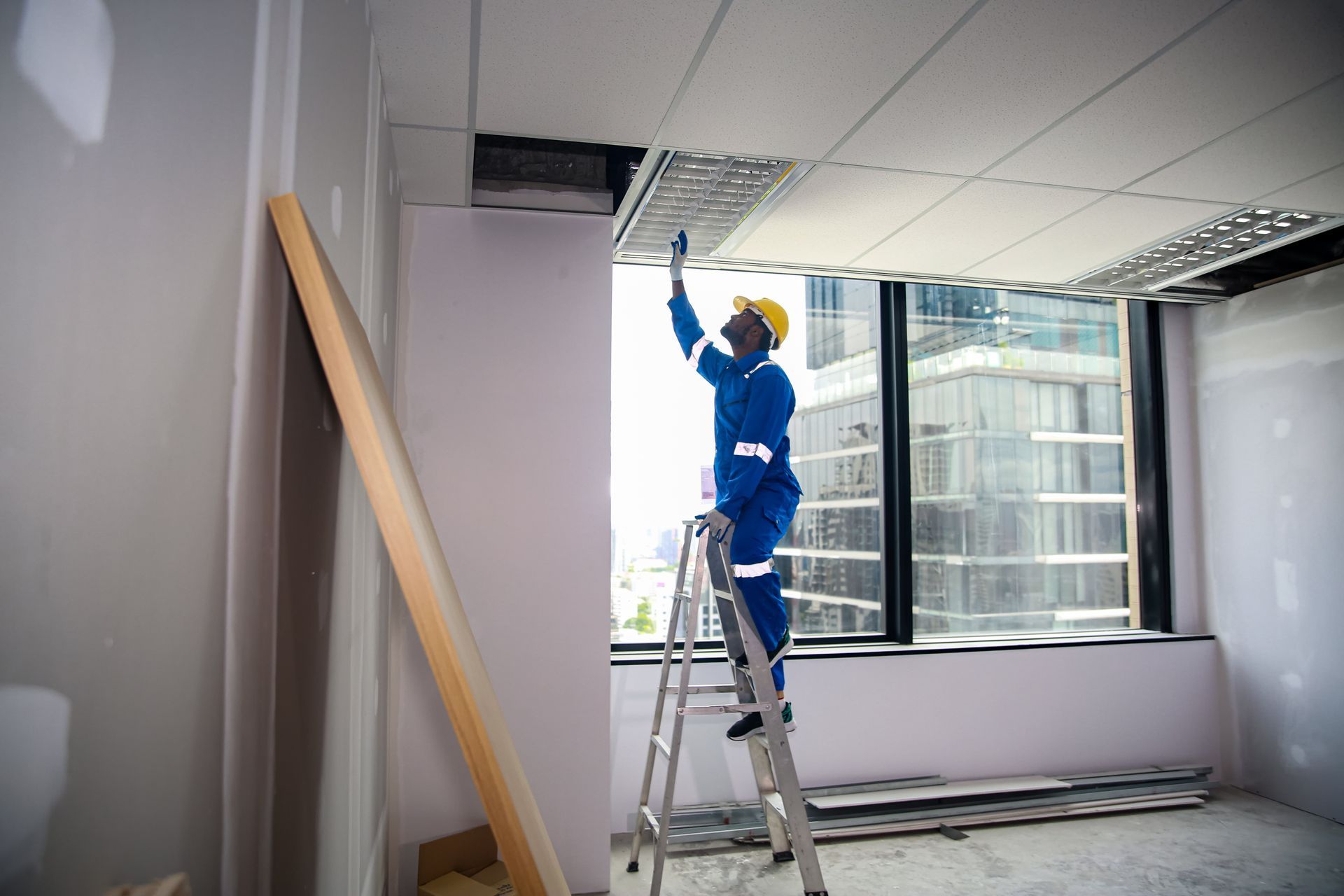
Water that gets past the roof shows up indoors, often before anyone sees the damage above. A walk through the top floor after a storm can reveal a lot, and it is the safest inspection you can do yourself.
- New water stains on ceilings or walls.
- Active drips or leaks during or after rain.
- Bubbling paint or sagging ceiling tiles.
- A musty smell signaling hidden moisture behind walls or above ceilings.
Why Interior Checks Matter
Interior signs are valuable because they are safe to check and they confirm that water has actually breached the roof. A stain that was not there before the storm is strong evidence of new damage.
Catching these signs early lets you get a professional assessment before a small leak damages inventory, equipment, or the building interior. In a commercial setting, that early catch can prevent costly business disruption.
It is worth checking the top floor and any spaces directly under the roof after every significant storm, even when the roof looks fine from outside. Water can travel along the underside of a roof deck and appear well away from the actual breach, so a stain in one spot does not always mean the damage is directly above it.
What Causes Commercial Storm Damage
Understanding what storms do to a roof helps explain what to look for. A few forces cause most commercial roof storm damage, and each leaves its own signature.
Wind and Uplift
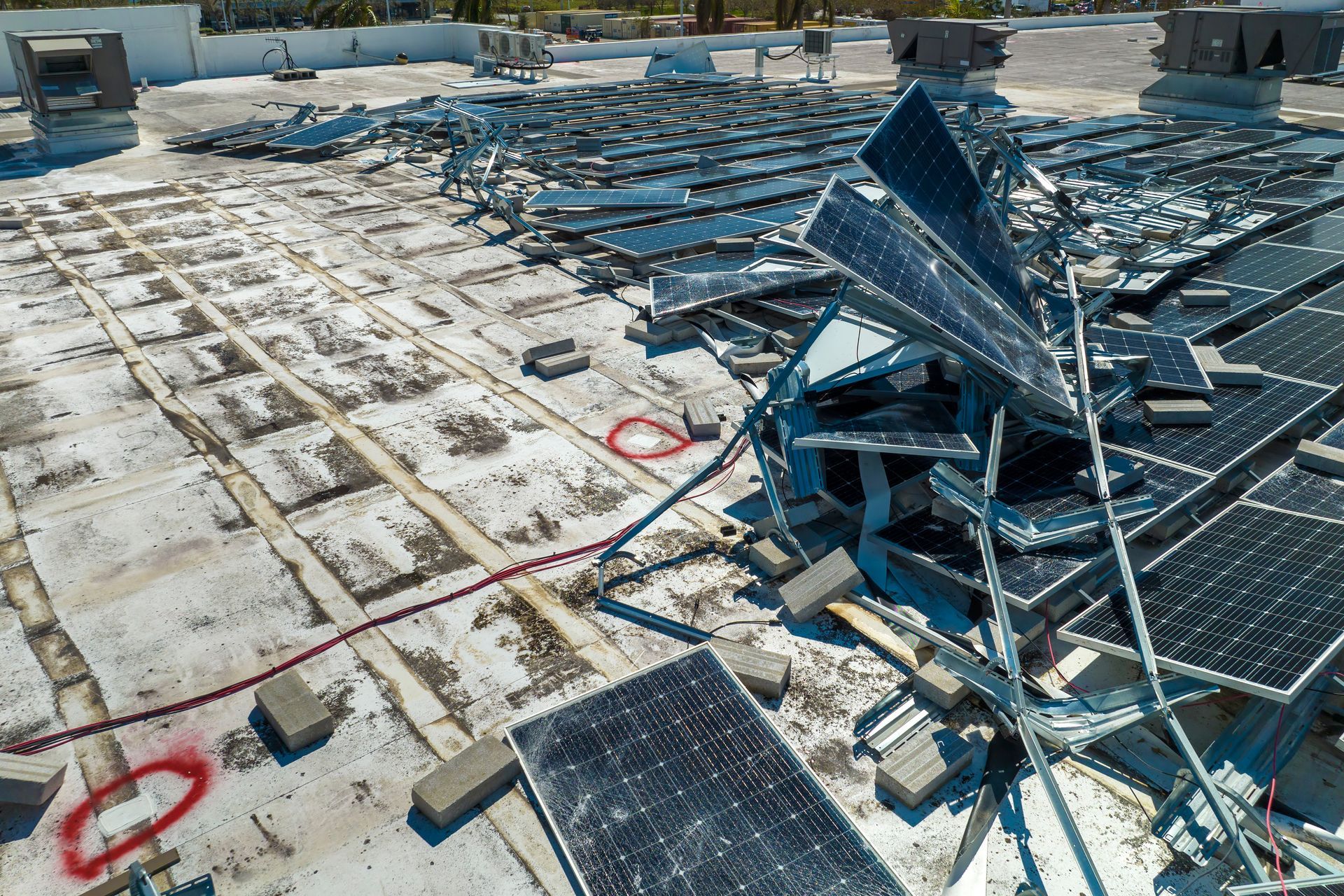
High winds are one of the most common causes. Wind creates uplift forces that can loosen, lift, or peel back the membrane and flashing, especially at edges and corners where pressure is highest.
Once wind gets under the membrane or flashing, it can progressively worsen with each gust. This is why edges and corners deserve extra scrutiny after a windstorm.
Connecticut sees strong winds from nor'easters, thunderstorms, and the remnants of tropical systems, all of which can generate the uplift forces that damage flat commercial roofs. Buildings in exposed locations, or with older membranes nearing the end of their life, tend to see the worst of it.
Hail and Impact
Hail bruises and splits roofing membranes, sometimes in ways that are not obvious immediately but shorten the roof's life. Flying debris, from branches to loose materials off nearby structures, punctures and tears the surface on impact.
Rooftop equipment can become a hazard in high winds as well, since loose panels, vents, or units can shift and gouge the membrane. After a strong storm it is worth having an inspector check around all rooftop equipment, not just the open field of the roof.
Both leave physical damage that compromises the waterproof layer. Even when the harm looks minor from a distance, impact damage can create weak points that fail later, which is why professional assessment is worth it.
Storm Damage Types at a Glance
This table connects each type of damage to its cause and how urgent it is.
| Damage Type | Usual Cause | Urgency |
|---|---|---|
| Lifted or peeled membrane | Wind uplift | High |
| Punctures and tears | Flying debris | High |
| Bruising and splits | Hail impact | Moderate to high |
| Loose or lifted flashing | Wind at edges | High |
| Blocked drains, ponding | Storm debris | Moderate |
| Interior stains or leaks | Any breach above | Act now |
Anything letting water in, or an active interior leak, needs prompt attention. Hail bruising can be less obvious but still shortens the roof's life, so it is worth having assessed even when it looks minor.
Safe Next Steps After a Storm
Knowing what to do, and in what order, keeps a storm response safe and effective. The sequence matters as much as the actions, since rushing onto a damaged roof can turn a property problem into an injury.
Prioritize Safety First
Never walk a commercial roof after a storm to assess damage yourself. Wet membranes, hidden weak points, downed power lines, and structural uncertainty make it dangerous, and it should be left to professionals with proper equipment.
Do your checks from the ground, from windows, and from inside the building. If there is an active interior leak, contain it with buckets and move valuables, but do not attempt roof repairs yourself.
For a business, there is also a liability angle. Sending an untrained employee onto a storm-damaged roof puts both the person and the company at risk, so post-storm roof assessment is one task that belongs with insured professionals every time.
Call a Professional Promptly
After a major storm, schedule a professional inspection promptly, since roofers get busy quickly and hidden damage worsens with time. A qualified contractor can safely assess the full roof and identify damage you cannot see from below.
Prompt action can mean the difference between a simple repair and major water damage. Our commercial roof repair team responds to storm damage and can secure and repair the roof before the next weather event. For extensive damage, our roof replacement team can assess whether repair or replacement makes more sense.
A qualified contractor can also provide temporary protection, like tarping or sealing exposed areas, to prevent further water intrusion while a full repair or an insurance claim is arranged. In our climate, where storms can follow one another closely, that interim step often prevents a second round of damage.
Documenting Damage for Insurance
For a commercial building, the insurance process is a major part of storm recovery. Good documentation protects your claim, speeds up the outcome, and reduces the chance of a dispute over what the storm actually caused.
What to Document
Thorough documentation right after the storm strengthens your claim. The goal is a clear record of what happened and when, captured before any cleanup or temporary repairs change the scene.
- Photos and videos of all visible damage, inside and out.
- The date and details of the storm event.
- Any interior damage to the building or contents.
- Your inspection notes and the professional's report.
Working With Your Insurer
Report the damage to your insurer promptly and keep records of all communication. A professional inspection report documenting the storm damage supports your claim and helps establish that the damage was storm-related.
This is also where prior maintenance records help, since they show the roof was in good condition before the storm. Keeping up with routine roof maintenance and inspections gives you that baseline and makes storm claims far smoother.
Be aware of your policy's deadlines, too. Many commercial policies require that storm damage be reported within a set window, so acting promptly protects both the roof and your ability to claim. A professional report that clearly ties the damage to the storm event is often what keeps a claim moving without dispute.
Responding to Commercial Roof Storm Damage
After severe weather, check your commercial roof from the ground and inside for membrane damage, lifted flashing, blocked drains, and interior leaks, document everything for insurance, and call a professional for a safe roof-level inspection. Acting quickly keeps minor storm damage from becoming major water intrusion.
At International Roofing CT, we respond to commercial roof storm damage across Connecticut and help building owners assess, document, and repair it safely. When a storm hits,
reach out to our team or learn more about our
commercial roofing systems and services. We will help you protect your building before the next storm arrives.
Frequently Asked Questions
What should I check on my commercial roof after a storm?
Check from the ground and inside for visible membrane damage, lifted flashing, blocked drains, debris, and interior signs like ceiling stains or leaks. Document everything with photos, and call a professional for a full roof-level inspection rather than walking the roof yourself.
Should I go on my commercial roof to check for storm damage?
No. Walking a commercial roof after a storm is dangerous due to wet surfaces, hidden weak points, and possible structural damage. Do your checks from the ground, windows, and interior, and leave the roof-level inspection to professionals with proper safety equipment.
How soon should I inspect a commercial roof after a storm?
As soon as it is safe. Prompt inspection catches hidden damage before it leads to water intrusion, and roofers get busy quickly after major storms. Early documentation also strengthens any insurance claim you may need to file.
How do I document commercial roof storm damage for insurance?
Take photos and videos of all visible damage inside and out, record the date and details of the storm, and obtain a professional inspection report. Prior maintenance records also help by showing the roof's condition before the storm.
What are the most common types of commercial roof storm damage?
The most common are wind uplift that lifts or peels membrane and flashing, hail that bruises and splits the membrane, debris impact that punctures the surface, and blocked drains that cause ponding water. Each compromises the roof's waterproof layer.
Recent Posts